The second-generation real estate executive—he’s part of the well-respected Rufino clan—gets candid about how important it is for the industry to double down on sustainability efforts and to start caring about the environment a little more.
Raymond Rufino is committed.
As the CEO of NEO, he leads the real estate development company behind the green office buildings in Bonifacio Global City. One might imagine him as a no-nonsense, serious type of guy, but on the surface, he seems quite easygoing, yet firm with his ideals. He smiled frequently during the interview and was generous with his answers.
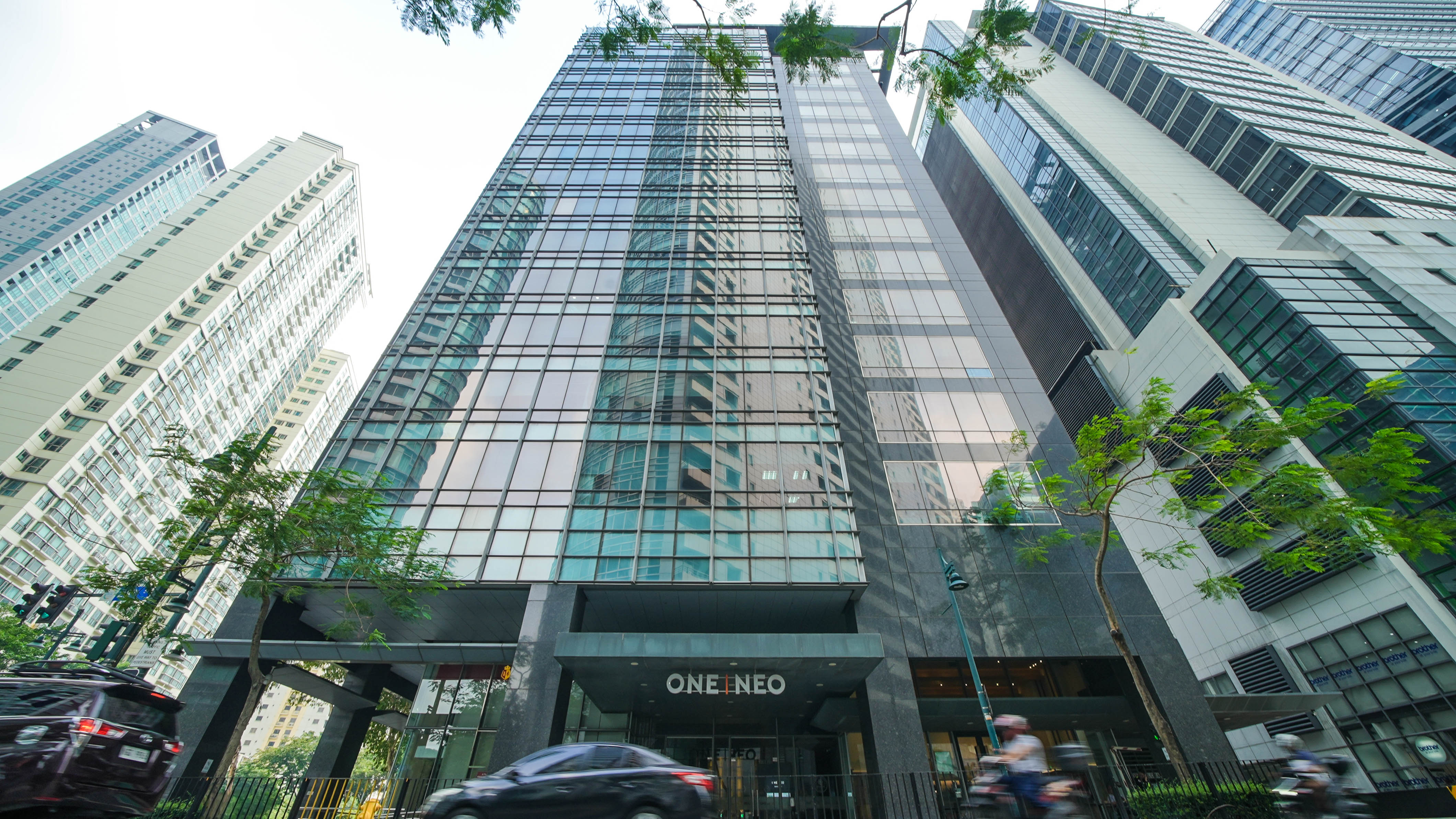
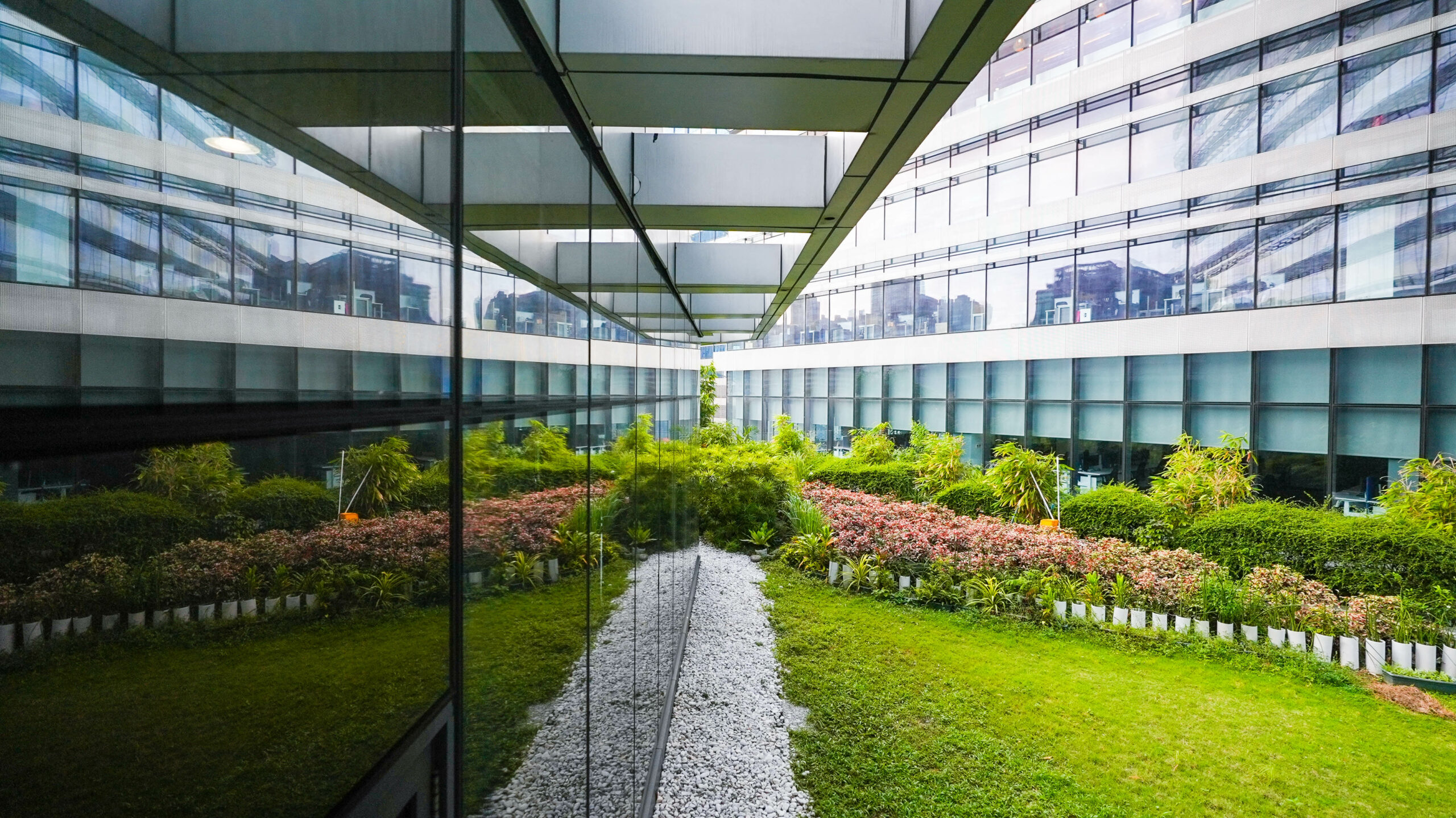
It makes sense for the licensed real estate broker and Real Estate Development Master’s degree holder to lead such a forward-thinking firm. NEO is the Philippines’ top green developer, the first company in the world to be certified as EDGE Zero Carbon by the International Finance Corporation, and the first office portfolio in Southeast Asia to achieve the WELL Health-Safety Seal. The portfolio is also certified 5 Stars under Building for Ecologically Responsive Design Excellence (BERDE), a green-building voluntary rating system.
Rufino’s commitment to sustainability has been present from the start. He recalls a conversation with his father, Charlie Rufino, soon after he came home from New York upon earning a Master’s degree from Columbia University. The elder Rufino had asked him, “Now that you’re coming back to join the business, what can you bring? What can you contribute?” His brothers, JV and Carlo, are part of the family business, too.
The son was quick to answer, “I really want to do more in sustainability in real estate.” Early on, he had seen that very little was being done to make real estate projects green and sustainable.
“He really liked the idea and fully supported me,” he says of his father. “When I came back, it became one of the key pillars of our company, where we now focused on making sure that all of our developments were green, sustainable, and resilient.”
Much more than real estate
As much as he is committed to working and attending meetings throughout the day, he also makes time for other things, such as lunch with his team, dinner with his family, and a string of advocacies that keeps his schedule full to the brim.
Rufino is a member of Entrepreneurs’ Organization (EO) and Young Presidents’ Organization (YPO), both focused on building leaders who can drive a bigger global impact. He is also part of the Philippine Green Building Council (PhilGBC); World Wildlife Fund (WWF); Filipinos in Institutional Real Estate (FIIRE), a non-profit commercial real estate diversity group focused on educating, mentoring, and growing a symbiotic network of Filipinos in institutional real estate; and Urban Land Institute (ULI), the oldest and largest network of cross-disciplinary real estate and land use experts globally.
Meanwhile, his company, NEO, is a member of ARISE Global Network, a private sector companies’ network committed to risk-informed development, disaster risk reduction, and preparedness action.
Rufino explains why he chooses to take part in many advocacies: “One of the things I believe in is that it’s one thing to focus on work. You have to focus on making work successful because you have a commitment to your business, a commitment to your shareholders, a commitment to your family—because that’s your livelihood. But over and above that, I really feel that we also need to focus on making a difference, because we live in a country where there are so many needs, so many challenges, so many issues.”
Not the biggest but the greenest
All of NEO’s building are Net Zero Carbon buildings because starting early in green development has allowed its team to develop an expertise in the field. Cognizant of the fact that the real estate has one of the largest carbon footprints of any industry, the company has been doubling up on efforts to mitigate associated risks.
“If we want to address the effects of climate change—real estate being a major contributor to greenhouse gas emissions—we need to decarbonize our buildings,” he says. “We are proud to say that we’re one of the few developers in the world that has been able to achieve Net Zero carbon.
“I think that level of commitment is not so common, so I think that’s one of the things that really sets us apart, because when we as the owners of the buildings commit to a direction, we’re able to really push ahead and deliver for the benefit of our communities, our tenants, and our partners,” he adds.
What it means to be green
Being green in real estate, is more than being efficient in terms of power or water consumption, according to Rufino. For a building to be certified green based on BERDE standards, it needs to have a lower carbon footprint; to promote health and well-being of people who frequent the building; and resilient: able to withstand big events or unforeseen situations such as typhoons or an earthquake.
The BERDE rating system ranges from one to five stars, and it depends on developers how ‘green’ they want their building to be. If a building gets a BERDE five-star rating, then that building is world-class.
Rufino recalls that when he started ‘building green’ in 2007, sustainability wasn’t on any real estate developer’s agenda. He thinks the industry has come a long way since then.
A long way to go
These days, Rufino says that a majority of the big and successful—and even the more boutique and medium-scale developers—is integrating green building and sustainability in the way they design, build, and operate buildings.
“But I would say that’s true, more for the office sector,” he is quick to add. “If you look at the different types of real estate, the office sector is probably the leader in terms of green and sustainable buildings. And the reason for that is a lot of the big tenants, the big locators, they ask for it, they demand for it. So the market, by demanding for it, pushes a lot of developers to start to commit to it.”
The young executive is happy to report that while building green was expensive at the beginning, it is no longer the case.
“There used to be a premium to green building, but doing a green building today does not cost you more money,” he says. More products and expertise have emerged in the market over the years that have helped bring costs down.
“Going green is not necessarily more expensive,” he adds. “A lot of people carry that misconception. That every time you go green or make your building more sustainable, it’s going to cost you so much more money. That used to be the case.”
In the future, Rufino hopes that there would be more green residential buildings as well; that there would be more green condominiums, more green shopping malls, more green hotels, more green schools.
“I think that there’s still a lot that we can do that we can do in those sectors or property types,” he says. “The momentum is building compared to what it used to be, but there’s a lot that still needs to be done. Hopefully, that will continue to grow and that many other developers and builders and other members of the real estate industry will really start to push more.”
Read more: https://www.esquiremag.ph/long-reads/features/raymond-rufino-neo-sustainability-a3438-20240906-lfrm